
RNA

The molecular language behind programmable biology and next-generation medicine.

Timeline

Understanding

1950s–1960s — scientists begin to understand that RNA is not just a chemical substance, but an active working layer of life. It helps transfer genetic instructions and control how cells build proteins.

Naming

1930s — the term ribonucleic acid becomes established as biology starts clearly distinguishing RNA from DNA and other cellular molecules.

Application

21st century — RNA moves from laboratory science into broad real-world use through genetics, diagnostics, RNA therapeutics and mRNA-based medicine.

Scientific Visualization
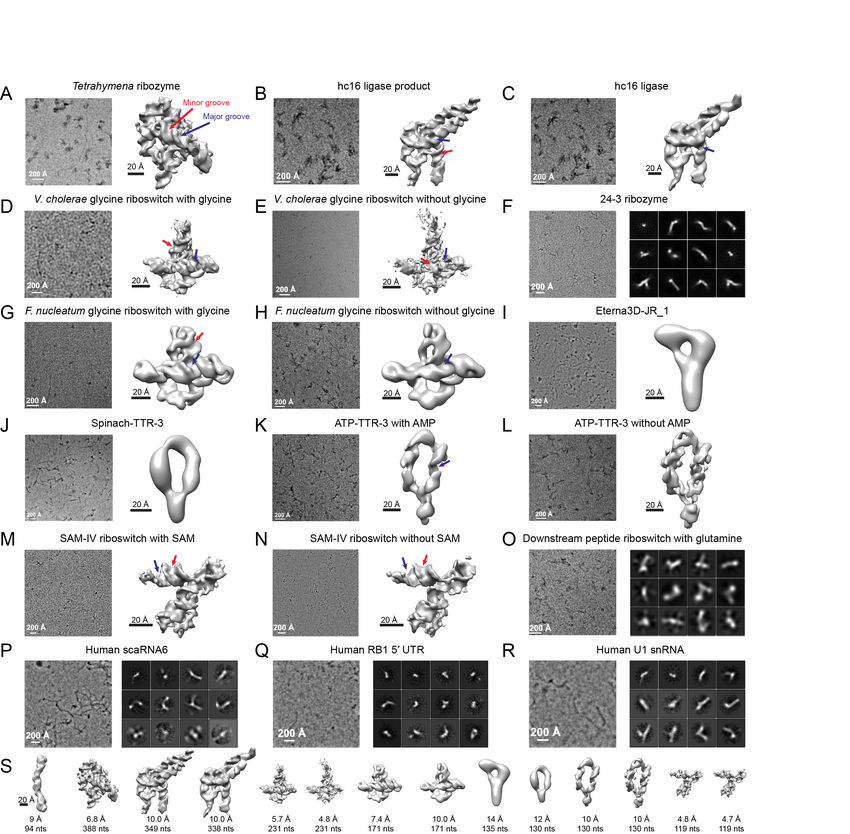
Scientific visualization related to RNA research
Image source: Kappel et al., Accelerated cryo-EM-guided determination of three-dimensional RNA-only structures, Nature Methods, 2020, Fig. 2.
Note: In molecular biology, many images are reconstructions or measurement-based scientific visualizations rather than ordinary photographs.

What RNA is

RNA, or ribonucleic acid, is one of the core molecules of life. The simplest way to imagine it is as a working copy of biological information. If DNA is like a long-term archive or master library, RNA is more like a temporary instruction sheet taken from that library and carried to the place where work gets done.

In living cells, RNA helps move information, regulate activity and guide the production of proteins. Proteins are the structures and tools that let cells function. Without them, life cannot operate.

Why it matters

RNA matters because it sits between information and action. DNA may store the code, but RNA helps turn that code into reality. It is the layer that makes biology dynamic.

A useful comparison is this: DNA is like the blueprint locked in an archive, while RNA is the copy handed to engineers on the factory floor. That is why RNA became so important once science began trying not only to read life, but also to guide and redesign it.

Scale and context

RNA exists at a scale far below what the human eye can see. It belongs to the molecular world, where size is measured in nanometers. A nanometer is one billionth of a meter. That means RNA operates in a realm so small that ordinary human intuition struggles to grasp it. If RNA were scaled up to 1 centimeter, a virus would be about the size of a person, a cell would become the size of a building, and a human would stretch across thousands of kilometers.

Yet despite that tiny scale, its impact can be enormous. Small molecular changes can alter how cells behave, how diseases develop and how treatments work.

Potential benefits

The power of RNA is that it can be read, analyzed and increasingly designed. This makes it valuable for medicine, diagnostics, biotechnology and synthetic biology.

In practical terms, RNA opens the door to faster vaccine development, new therapeutic approaches, more precise disease detection and a better understanding of how living systems function. It is also becoming a foundation for next-generation treatments, including emerging approaches in cancer therapy. It is one of the clearest examples of how modern science turns hidden structures of nature into usable tools.

About the Image

Not every frontier technology can be photographed directly in the ordinary sense. In fields such as RNA, atoms or molecular biology, what we “see” is often a scientific image, reconstruction or measurement-based visualization derived from specialized instruments rather than a conventional camera.

Method
What it shows
Scientific source
Cryo-EM
Reconstructs 3D structures of biomolecules from many particle images captured at cryogenic temperatures. Useful for large RNA assemblies and structural biology.
AFM
Maps the nanoscale surface topography of individual molecules. Can directly visualize RNA conformations and molecular architecture in near-physiological conditions.
Single-molecule fluorescence / smFISH
Tracks or detects individual RNA molecules inside cells using fluorescent probes. Best for localization and dynamics rather than full 3D structure.
X-ray crystallography
Determines atomic arrangement from diffraction patterns of crystallized molecules. Often used for structural models of RNA, proteins and complexes.

In other words: the image above should be understood not simply as a “photo,” but as part of a broader scientific process of making hidden structures visible.